
Thermal comfort and overheating
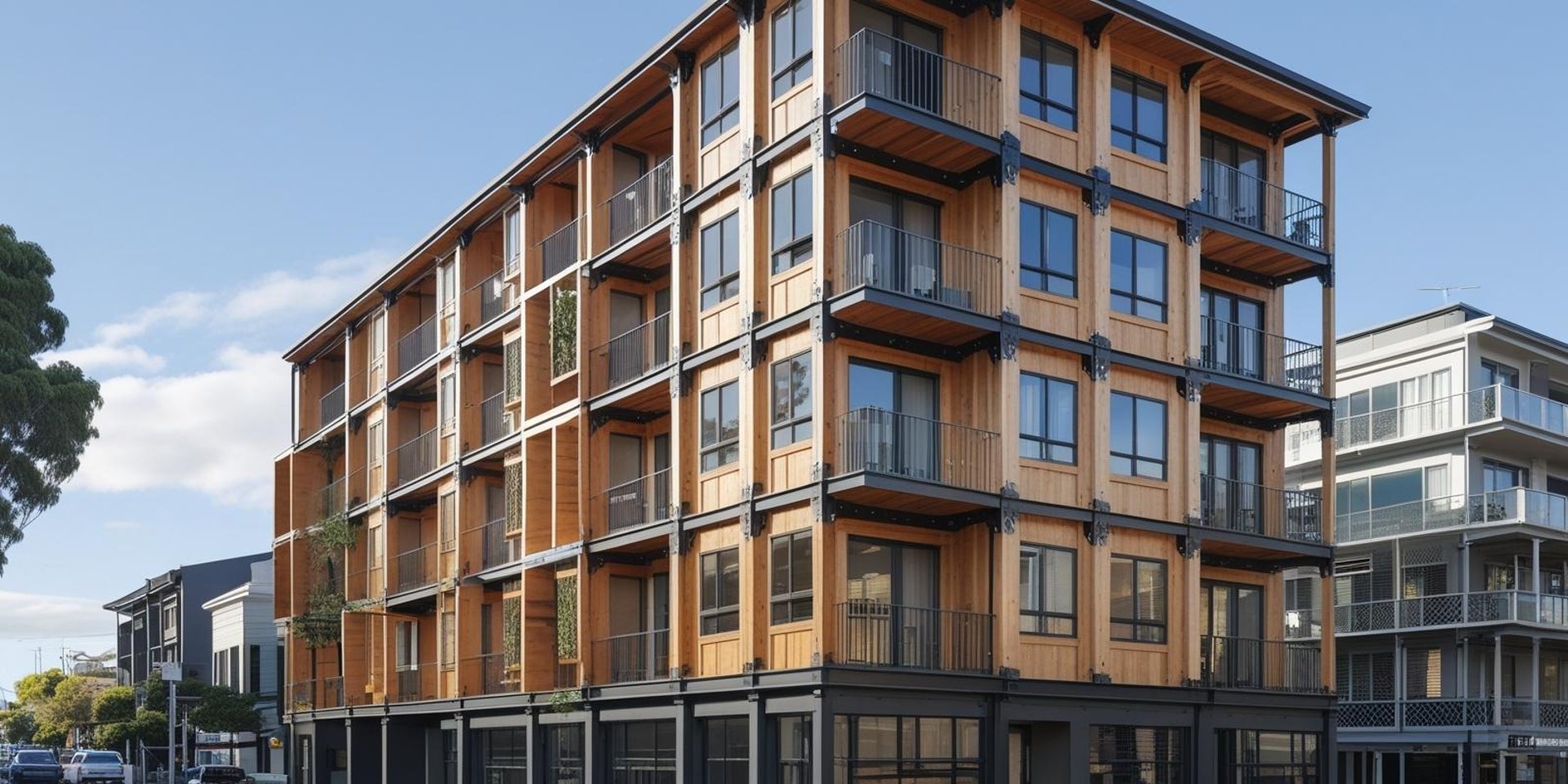
Overheating summary
The issue of overheating in buildings is growing in NZ. Warming climates and increasing insulation requirements, along with contemporary architectural / real estate preferences, are driving up temperatures within buildings. More and more reports of overheating are coming out, with some dwellings exceeding 40oC - reflecting the lack of understanding and design measures taken to ensure comfort. It is essential that more attention is given to this issue to avoid creating unlivable hotboxes.
At particular risk are medium and high density domestic situations. Town houses, terraced housing, apartment blocks, hotels, student accommodation, and schools, are the most susceptible to overheating problems. This is due to their typically compact building forms, higher occupant densities, and poorly arranged ventilation/cooling strategies.
Thermal comfort (which encompasses overheating during warm periods and 'underheating' in cool periods) is an essential but usually overlooked element of building performance. It is a much more complex phenomenon than most professionals understand, which is why it is so frequently an area of poor performance, even in brand new, expensive buildings.
There are many elements that impact thermal comfort and overheating, all of which also impact energy efficiency, and many other performance issues (e.g. noise, security, privacy, views, etc. etc.). Below is an outline of the type of elements that need to be understood and designed correctly to balance thermal comfort, energy efficiency and other issues:
Climate and microclimate
Neighbouring buildings
Orientation
Facade design
Glazing areas and specifications
Views and daylight/glare
Window openings and ventilation design
Safety and security
Noise and air quality
HVAC strategies and capacities
Internal gains and space usage
Spatial restraints
Similarly, there are a range of ways to evaluate thermal comfort during design, including:
CIBSE TM52. For naturally ventilated buildings.
CIBSE TM59. For naturally ventilated residential buildings.
Predicted Mean Vote (PMV) and Predicted Persons Dissatisfied (PPD) for mechanically conditioned buildings.
Green Star credits
Homestar credits
Operative temperature ranges

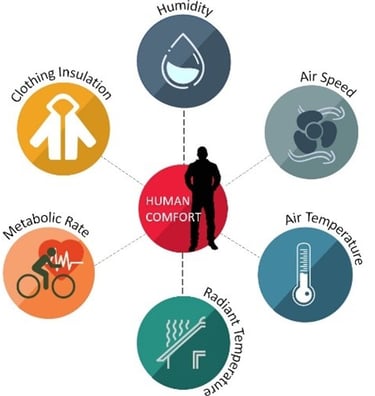
The 6 factors influencing thermal comfort [Simulation Hub]
I spent much of my early career in the UK undertaking various thermal comfort and overheating assessments and design exercises - I estimate I conducted around 100 different overheating / thermal comfort / ventilation type exercises over 6 years.
On my return to NZ I was disapointed to see the almost non-existent practices around overheating. Through project work, speaking to other professionals, attending conferences/events, etc. it soon became clear that my time and experience in the UK put me well ahead of the NZ industry in the topic of overheating.
Along with my broader building science and industry experience I believe I'm one of the most skilled practitioners in this area in NZ.

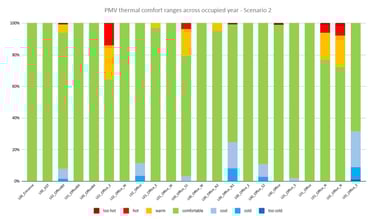
Modelled thermal comfort (using PMV) ranges graph for a multi-zone building [Ecolution]
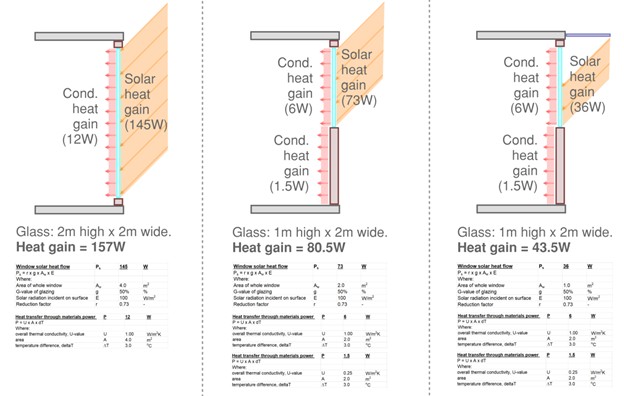
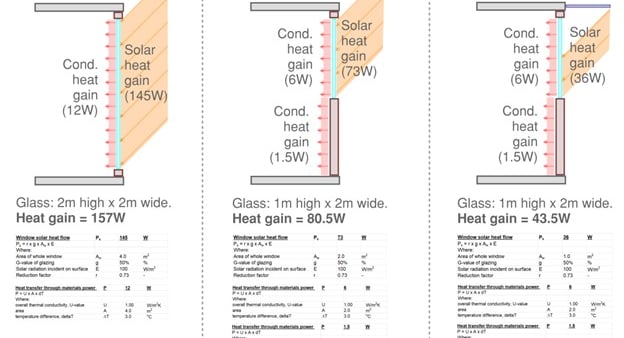
Basic passive design measures to limit solar heat gain and overheating [Ecolution]


Annual Operative Temperature range test[Ecolution]
Peak Operative Temperatures [Ecolution]
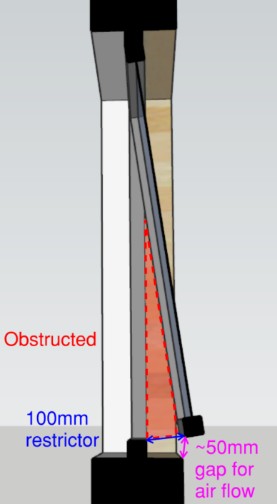
Openings issues[Ecolution]


As such, Ecolution can expertly guide your design to avoid overheating and maintain high levels of thermal comfort throughout the year. Using first principles for initial design exercises, through to detailed tests with with dynamic thermal simulations, I can support you to develop suitable and cost-effective solutions to your project.
To discuss your project and get a better understanding for it's situation regarding thermal comfort and overheating, please enquire to via the contact form on the 'Contact' page, or by sending an email to EcolutionSBS@outlook.com
CIBSE TM52 and TM59 overheating standards [CIBSE]
Ecolution SBS
Tailored solutions for healthier, environmentally responsible buildings.
Site Navigation